In this example it is only necessary to load the files from the newestfolder, because this folder contains the entire data. However, the file names also change with the daily export.
Learn how to automate your PowerBI reports by always loading the latestfile from a folder. In this tutorial, I'll guide you through the process of setting up PowerBI to...
In that same PBIX, I have one report that only views the mostrecent CSV in that folder. Each time the data is refreshed, I change the filter for that one report to view the mostrecentfile.
So the solution to this is to get the latestfile from each folder, which contains all the data for that month. I can you do this in PowerBI? Just to make it easy for this demo, I transferred all the files from the storage account to a local folder on my computer. Let’s start with PowerBI.
One of the most common tasks of Power Query is to set up automated data refresh from multiple sources. One of them are folders, which retrieve basic information about files (e.g. create date,...
Connect to Sharepoint folder, choose transfrom data. 2. In power query, select the date modified column and filter it as 'Is latest' 3. Now you will get the lastestfile content in power query, expand and import it into powerbi to get the whole data.
There are quite a few common business scenarios where you get data in the form of a file on a regular basis from some source system and you need to process these files into your PowerBI reports.
The video tutorial demonstrates how to automate the process of importing the latest Excel file from a folder into PowerBI. Initially, it covers the manual method of updating the data source, which involves pointing to a specific file.
This is a hybrid approach, combining Power Query logic and PowerBI's append strategy, though not using the traditional Incremental Refresh feature. Here's how you can do it:
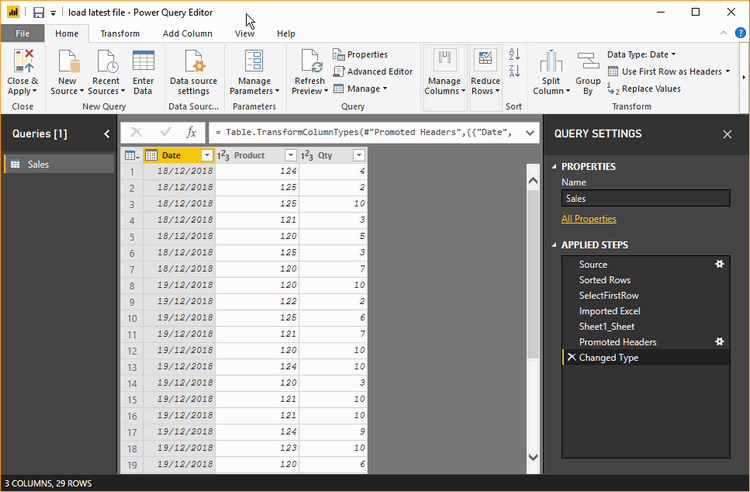 There are quite a few common business scenarios where you get data in the form of a file on a regular basis from some source system and you need to process these files into your Power BI reports.